
What Brides Should Ask Before They Buy Their Wedding Dress
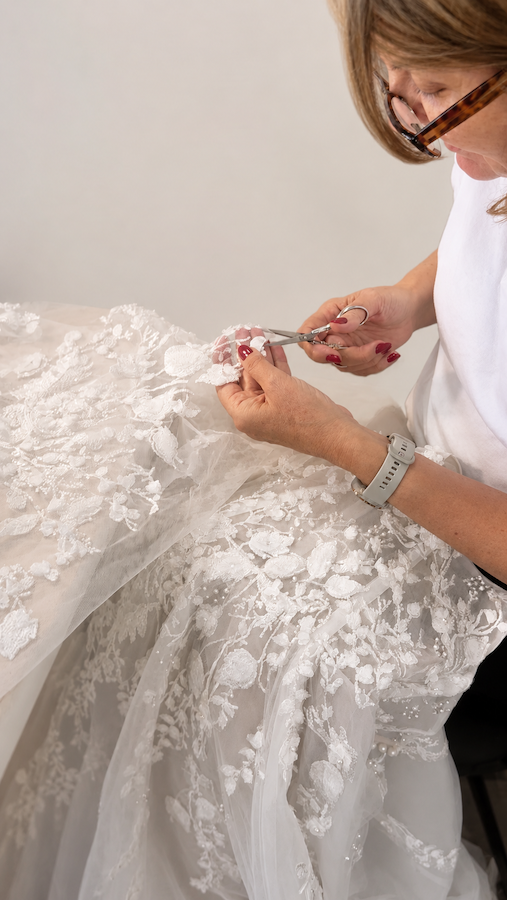
What Brides Should Ask Before They Buy
I want to share a story — not to criticise, but to educate.
Over the years, I’ve worked with many brides who purchased their gowns elsewhere and came to me for alterations. Most of the time, we can make it work beautifully.
But sometimes… the reality is much more complicated.
Recently, a bride came to me just four weeks before her wedding. She had purchased her gown overseas and, due to timing, had only tried it on properly the day before flying back to Australia.
By the time she saw the dress again at home, she realised something wasn’t quite right.
The neckline was different to what she had chosen.
She had wanted a straight, bralette-style neckline — but her gown had arrived as a sweetheart.
From there, the list grew.
The bodice was too long in the waist.
The hem needed shortening.
The dress needed to be let out.
She wanted sleeves added — detachable, with mirrored appliqué.
On paper, these might sound like “standard alterations.”
In reality, they were anything but.
Why Some Alterations Aren’t Simple
To lift a bodice that has heavy appliqué means removing and reworking intricate lace — by hand.
Creating detachable sleeves with mirrored lace only works when the lace itself allows for symmetry. Not all lace does. In her case, it was an all-over lace, which means it doesn’t naturally mirror. The end result would never match the inspiration image she had been shown.
The back of the gown had metal eyelets set into a jersey-lined bodice.
This is where construction matters.
Jersey stretches. Metal doesn’t.
Over time (and even just trying it on), the fabric had already begun to pull away from the eyelets, leaving visible holes. To stabilise it, I would have needed to rework each one individually using a buttonhole stitch — essentially rebuilding the structure by hand.
The Reality of Cost
By the time I carefully assessed everything, the alterations were approaching $1,500.
Not because of overpricing.
But because of the time, skill, and reconstruction required.
I could see she was taken aback — and I completely understood.
She hadn’t planned for this.
And this is the part that’s hard for brides:
You don’t know what you don’t know… until you’re standing in front of someone who does.
The Missing Link: Guidance at the Time of Purchase
When you purchase a gown and walk out of a boutique — especially overseas — you’re often walking away from the full journey.
There’s no follow-up fitting.
No one assessing how the gown is sitting on your body long-term.
No seamstress advising what shouldn’t be changed.
And sometimes, no one explaining what is realistically achievable.
That’s where things can unravel.
What Brides Should Be Asking Before They Buy a Wedding Dress
If you’re shopping for your wedding dress — whether locally or overseas — here are a few things to keep in mind:
- If you want to add sleeves later, ask: Is there matching fabric or lace available?
- If you’re changing the neckline, ask: Can this actually be re-cut without compromising the structure?
- If the gown has boning, stretch lining, or eyelets, ask: How will this behave once altered?
- And most importantly: Who is doing your alterations?
Because that person will ultimately determine how your dress fits, feels, and looks on your wedding day.
A Gentle Truth
I didn’t end up doing her alterations.
And that’s okay.
But I truly hope whoever does takes great care of her — because she deserves to feel incredible in her dress.
From Me to You
I say this often, and I’ll keep saying it:
A wedding dress isn’t just about how it looks on the hanger.
It’s about how it’s made, how it fits, and what it can become.
And sometimes, the cheapest dress… can become the most expensive one in the end.
```